

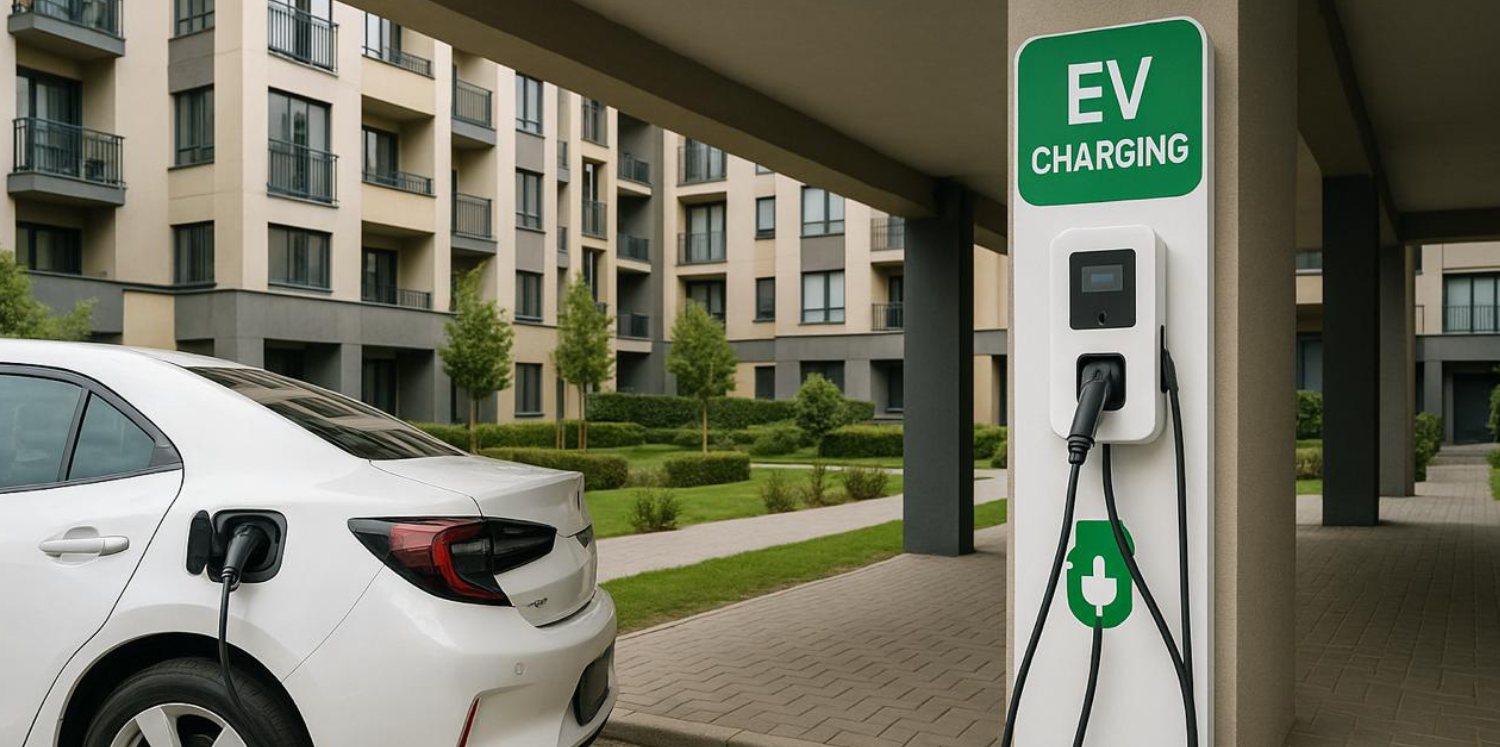
Emphasizing Safety In EV Charging Installations in Buildings
The automobile sector has been growing by leaps and bounds in the last decade globally and sector has boomed significantly in India. But the introduction of Electric Vehicles (EVs) in the system has changed the landscape of transport production and purchase.
One of the major supporting set-ups for EVs is the charging infrastructure. Without accessible and reliable charging points, the EV transition cannot be realised or even scaled.
In India, where more than 95% of EVs are charged in commercial and residential buildings, the charging infrastructure has become a necessity.

Why Buildings Matter in EV Transition
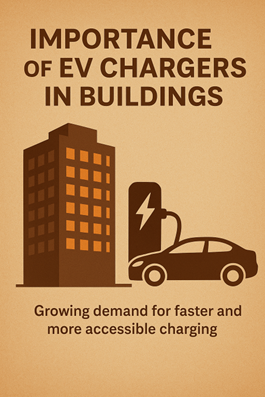
The ICA India Consumer Perspective Study revealed that one of the roadblocks in EV adoption is the lack of sufficient and appropriate charging infrastructure. Most of the EVs present in the transportation ecosystem of the country spend over 90% of their time parked at residences or workplaces. This makes buildings, that is, the residential apartments, housing societies, and commercial complexes, the backbone of India’s EV ecosystem.
Buildings with prominent parking spaces allows users to charge where their vehicles are stationed the longest. Having an integrated EV charging facility in buildings is about directly aligning with India’s national e-mobility goals.
The Change in the E-Mobility Ecosystem
ICA India, along with its members and partners, has been actively working to promote safe and reliable EV charging solutions across the country. Through policy advocacy, stakeholder engagement and technical expertise, it is helping shape a sustainable EV ecosystem.
The organisation focused on addressing state-level challenges, where building permissions and local regulations often face bottlenecks.
Like in Telangana and Kerala, it has worked extensively to draft guidelines for EV charging stations in buildings. These included a set of documents, a clearance framework and a whitepaper with recommendations. These efforts can influence the formal release of state guidelines.
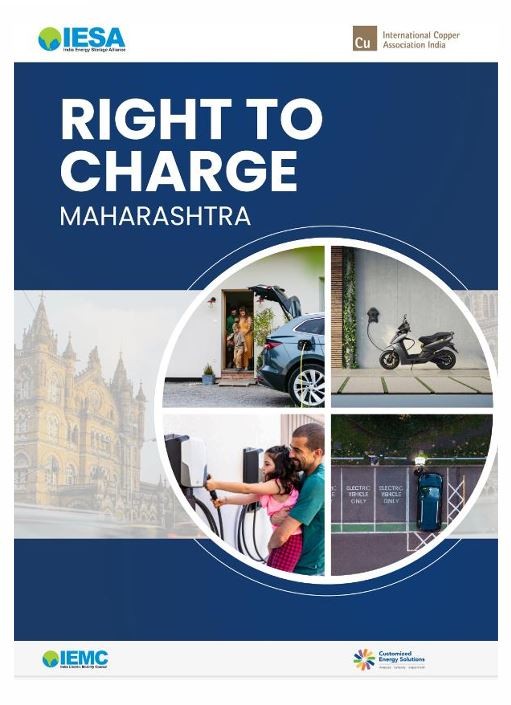
In Maharashtra, ICA joined hands with the India Energy Storage Alliance (IESA) to launch the ‘Right to Charge’ Campaign. This initiative engaged DISCOMs, municipal bodies, fire departments, electrical inspectorates, architects, and real estate associations and addressed issues such as fire and electrical safety, ease of implementation, cabling standards, and the need for single-window approvals. Some of the steps taken in the state of Maharashtra include:
- Interaction and engagement with stakeholders through workshops in Maharashtra and seminars to stress on the need for residential and commercial charging.
- Advocating for electrical safety standards and codes to ensure safe and compliant installations.
- Partnering with the apex public policy think tank of the government on a Strategy Roadmap for EV Charging Infrastructure, aimed at supporting India’s vision of having 1 million charging stations nationwide.
These efforts help in providing a comprehensive analysis of challenges, identifying gaps and proposing solutions to accelerate infrastructure deployment.
Roadblocks for the deployment of EV chargers in buildings
The challenges stress on the importance of clear, enforceable guidelines that balance safety, affordability, and accessibility. Some of them are:
- Restrictions by Resident Welfare Associations (RWAs) on installing chargers in all the present parking lots.
- Housing societies are not allowed to have connections from main panels or additional power lines.
- Transformer capacity limitations in existing societies.
- Safety concerns due to unskilled electrical installations and undersized cabling.
Way Forward:
ICA India recommends a phased approach to deploying EV charging infrastructure in buildings. Some of which include:
- Guidelines for Parking & Safety: To ensure fire safety and suppression methods, guidelines for basement and open parking areas need to be established.
- Establishing Standards & Regulations: To ensure reliability, clear installation and cabling standards are needed.
- Safe Charging Methods: The importance of OEM-backed recommendations for safe charging practices.
- Essential Fire Safety: Specific protocols for EV battery fires and firefighter training are required.
To read more, click on the link below: https://copperindia.org/viewwhitepaper/framework-for-safe-and-scalable-ev-charging-in-maharashtras-buildings/
Creating Awareness and Building Confidence
By working with stakeholders who have the power to influence the system, ICA India promotes the idea that EV charging in buildings evolves from being an afterthought to becoming a central pillar of India’s mobility revolution.
Their suggestions serve as an informal guide on safety, standards, and processes, helping to build consumer confidence and encourage the wider adoption of EVs.
As India tries to achieve its clean and green mobility goal, the EV charging infrastructure has become an indispensable part of modern constructions.